Essayons
___
The slogan of the U.S. Army’s Corps of Engineers, “Essayons,” is a French phrase meaning “Let us try.” This motto reflects the spirit of innovation and initiative that engineers embody in their work. The phrase is a nod to the French engineers who aided the American Continental Army during the Revolutionary War. Our neighbor Harry Puncec had a different take on it, saying yes, the whole experience was very trying.
By Harry Puncec
This story is about a three-month period in 1961 when America got caught up in the Berlin Wall Crisis. I have to caution you that this is a story about the Army NOT necessarily being heroic or noble, just a bunch of very young men who did good work and foolish stuff.
It was a trying time as I was finishing up my two-year tour of duty in the Army on August of 1961 when we were taken by surprise.
We were working as gandy dancers on the Eix, Abaucourt, Rozelier railroad spur line that ran from the main rail line between Verdun and Étain to a secret (oops!) munitions dump located amongst the old Maginot line fortifications. Because of the many twists and turns of the route and the up-grade it was a problem to get the rails laid and kept level. Because of the grading difficulties the work engine was able to attain the speed of only 15 miles per hour before it jumped the tracks but most of the time it had to slow down – way down.

A forgotten fort along the Maginot Line near where we were building a railroad spur line.
We were called to finish up the job begun by another engineer battalion when they were recalled to Germany. The tracks were laid and all that was required of us was to fine-tune the elevation. We were to locate sections of track that were not level across, jack up the lower side and fill in under the ties and rails with ballast (small rock), lower the tracks back in place, and measure again until the bubble on the level was centered. I was convinced that I would never see the end of the job because every correction seemed to screw up the tracks above and below the fix.
Receiving the Bad News
Our first clue that there was trouble brewing was when the company was called together and told that we would be relocating to Caserne Sidi Brahim in Étain immediately. We had to clear out of Étain Air Base to make room for a fighter wing of Air National Guard reservists coming in. Apparently the Reds had started building a wall to divide Berlin with the intention of keeping their people from fleeing to the West. It sure sparked an uproar back home. We were oblivious to it but learned fast. They also mentioned that anybody expecting to go home soon – which included me – could forget about it because everyone’s tour of duty was being extended for up to a year “for the convenience of the Army.” I was sick!
The caserne was located just blocks from the center of Étain on the highway to Metz and appeared to have been there forever. In 1961 it was the home of the 82nd Transportation Company and little else. It had a grand name but shabby look.
Caserne Sidi Brahim was named in honor of the French Chasseurs à Pied (French for light infantry or literally “Hunters on Foot”) who were stationed there in 1913 and ’14 until shortly before the Germans arrived. The name itself came from a tomb located in western Algeria near the Moroccan frontier. On 21 September 1845 a detachment of men from the 8th Chasseurs d’Orléans and some attached individuals fought a force of Berber tribesmen twenty times their number near that location. The fight lasted 3 days as the French struggled to escape. In the end only a handful survived. The battle lent its name to their marching song and later to the veterans’ organization that sprung up.
In 1916 the battalion was commanded by one of the heroes of the Battle of Verdun, Lieutenant Colonel Driant. When the German attack began they were located at Cavres near Fort Douaumont and received the first onslaught. Within days the unit was annihilated and the commander killed, but their fighting delay helped save the French army. Their name is legend in France, and one of the major forts near Metz was named after Col. Driant.
As glorious as the history of that honored unit may have been, the namesake base was modest in the extreme. My first impression was that the barracks were old stables made habitable for humans. I was wrong, they were actually rebuilt after World War I for the French 6th Military district and served in that capacity until the Germans returned in 1940. They probably would have come out of the war all right but the U.S. 3rd Army under General Patton requisitioned it in 1944 and stayed for a while. General Patton’s army ran out of gas just down the road a bit and were mauled by the retreating Nazis. A foul tempered army, with a frustrated General Patton himself living just blocks away, was more or less stuck in and around Sidi Brahim until the Battle of the Bulge three months later.
For a while after the war the base was home for the French Army’s 702nd Material Company. In 1950 it was transferred to the U.S. Army and was occupied by various small units as the cold war heated up. Now our turn arrived and all this history was lost upon us as we moved there from the palatial accommodations of the air base.
We had much to feel sorry about at Sidi Brahim. We were back in squad rooms with everyone shoehorned into a small area. The buildings had an inadequate heating system that struggled from the day we arrived. Only the first one or two people in the morning and evening found lukewarm water in the showers, and nobody found warm quarters.
As an experienced and wily soldier I knew enough to take care of my own creature comforts. One of the tricks was to sneak into the base chapel for a shower as it had its own independent supply of hot water. It was a strange feeling knowing that church services where going on just beyond the wall as I lathered up. I didn’t sing in the shower.
We attempted to fix a couple of things around the barracks but the results didn’t seem to help. One mistake was to inadvertently locate the water cooler in the mailroom so it was only accessible when the mail clerk was around. But it didn’t really matter because these changes were made just to kill time until we marched off to war.
A method of coping was walking to the Taxi bar, the only bar in town, for some serious drinking – but even that proved unsatisfactory. Every time we dropped by the bar it was filled with the called-up reservists and when we complained about our move to poorer quarters or tour of duty extension, they would laugh bitterly and point out that their new insurance agency was going down the tubes back home or that they were going to miss the birth of their first child. In the war of bitching, they had all the big guns.
During this relatively brief period we had frequent alerts because of the tense situation. Because the French demanded that we get clearance before leaving the base in convoy we spent all those alerts at home. It would follow a pattern of us being called out before daylight, told to get ready to roll, and then ordered to stand by.
During an alert we would set up our machine gun position just inside the chain link fence surrounding Sidi Brahim. The 50 caliber’s spot was in the northeast corner in front of the NCO club entrance steps and right under the 100-watt light bulb that was always on. Nothing I’ve ever done in life left me feeling as exposed and vulnerable as sitting there in the pre-dawn chill looking out into the dark and knowing that everyone for miles could see us. We did have the opportunity to watch various NCOs sneaking into the club for an “eye opener” that they never shared.
Sitting there we were saved from terminal boredom by playing poker, payday stakes, while the hours wasted away. It was a hell of a way to fight a cold war.
At last – a Mission
Finally the word came down that we had a mission. Operation Roundout! We were to travel across France to build a tent city for incoming American troops. The entire company sighed in relief; we would be heading in the opposite direction from Berlin. Our destination was the Army Hospital at Chinon located south west of Paris, about 575 kilometers (360 miles) from Étain. Our route by way of Troyes and Orléans would take us through some of the most historic parts of France but would avoid Paris, something about insane traffic. It was hinted that maybe on the way back …
Nearly every driver in our convoy had the foresight to lay on a supply of Cognac to hold them through the long drive. By the time we reached Troyes, about 150 miles into the trip, consumption was well under way. The full effect of the drinking became obvious when we reached Orléans. The convoy had to close up even tighter than usual going through town because of the complex street system, and the drivers couldn’t see beyond the trailer of the truck in front of them. My buddy and former roommate, Cade, was driving the lead truck and he was drunker than anyone. As we made our way he would swing his truck to the left, and then back to the right, and then to the left again to avoid blurred or imagined obstacles. The following vehicles had to assume that he knew what he was doing so they weaved along with him. A large conga line of army trucks snaked their way through town and past the spot where Joan of Arc had lifted the English siege of the city for King Charles VII centuries earlier. At the edge of town a halt was called, the CO ran up to Cade’s truck, jerked open the drivers side door, and watched as he fell to the ground, passed out. I’m convinced that a return via Paris died at that moment.
After an exchange of drivers we completed our odyssey long after dark had fallen. We unloaded at a vacant wing of the hospital and set up quarters.
The next day we were trucked less than a dozen miles to the Chinon General Depot near Saumur and introduced to the work site. It was an empty field that was to be made ready for an incoming battalion of about a 1000 troops from the States, and we didn’t have much time to get the welcome mat out.
There’s a lot involved in preparing an area for such an influx. The tents were not to be set up on the ground, which was mostly bottomless mud in any case, but on concrete pads. There were tents for sleeping – squad tents – latrines and showers, orderly and supply rooms, and Quonset huts for mess halls. That meant a lot of pads. The tents themselves were not just held up by tent poles and ropes but by individually built wooden stud frames. Each tent also needed electricity so the area needed to be wired. The latrines, showers, and mess halls had to have water so there was a lot of plumbing required. If you bring in water then you need to take out sewage so we had to install drainage and a large below ground septic tank. Everywhere we looked there were tasks to be performed.
The first priority was the concrete work. After graders leveled the ground, carpenters fanned out to frame the pads, ground level gutters, and septic tank. They were followed by the masons who mixed and poured concrete into the forms using a huge tractor driven cement mixer that could mix a couple of yards of concrete per load. To feed that monster were crews that shoveled sand, gravel, and cement from the bed of dump trucks into the rotating drum.
Once the pads started to set up, or harden, the frames were removed and the tent frames bolted down. Next the wiring was strung and the gas fed stoves installed. Finally the whole structure was covered with large tents made of canvas. In time a tent city for over a thousand men took shape with roads and working utilities. It wouldn’t be comfortable but they would be kept warm and dry.
The amount of work involved was prodigious. We worked a minimum of 12 hours a day and 7 days a week, and were give half a day off on Sunday to relax, attend church, and write home. We were exhausted and getting stressed from the pace of work so Sundays were welcome.
Occasionally a task would be completed late in the afternoon or the things needed for the next step weren’t ready and we would be returned to barracks early. Those rare occasions gave us the chance to shower, grab dinner, and then go to the Rod and Gun Club next door or the Enlisted Men’s Club nearby and get loaded.
On one occasion I decided to see how many Vodka Collins I could drink before closing and managed to down at least a half a dozen before I lost count. I was completely drunk by the time I returned to the barracks and crawled into my upper bunk. Many others were to repeat my experience before we pulled out in mid-November.
The off-duty drinking hit a high point one night at the Rod and Gun Club when a group from the company encountered a bunch of guys from another engineer company. First words were exchanged, then a little chest bumping, and finally a deadly quiet settled as each group eyed the other just waiting for something to happen. In the strained silence Private Boyer of our company jumped up, threw an empty bottle across the room, and then passed out. The fight was on.
I first learned of it when someone ran into the barracks and yelled that there was a fight. I looked out the window and could see a half dozen individual fights involving between two to four guys each. As we watched, and before we could join in, another guy burst in saying that the MP’s had been called and to cool it. I jumped back into my bunk and tried to act innocent. After a few minutes we started hearing the sound of running upstairs followed by shouts and the slamming of doors. We looked at each other and finally someone said those bastards were attacking our guys upstairs.
I grabbed my entrenching tool, a folded shovel that could be deadly in a fight, and rushed to the door at the end of the wing. I was the first to reach it, jerked it opened, and stepped through. Meeting me on the other side of the doorway was an MP who had been backing down the stairs with his 45 automatic pointing up where he had been. He heard a sound behind him and spun around to confront the new danger. What I saw was the muzzle of his 45 pointing at a spot between my eyes. The barrel was huge! When I jerked my eyes off the sight of the gun I could see a highly agitated guy with a slight wound on his forehead and huge eyes. In the nanosecond it required for all this information to be processed in my mind I came to a sudden and complete stop. Unfortunately the guys following me through the door didn’t have the benefit of my view of things and kept driving forward. As each guy collided with the guy ahead of him I was being pushed forward in a series of jerking movements. I knew my life was about to end and there was nothing I could do.
Thank god that the trigger was never pulled. The MP apparently realized that I meant him no harm, despite the deadly weapon in my hand, and backed out of the barracks still pointing his gun at me. From the outside door I watched him retreat to his jeep, drop down to one knee and use the hood to steady his hand as he pointed his pistol at the building. By now some of the guys realized that it wasn’t the other engineer outfit attacking us but rather MP’s trying to establish peace.
The duty sergeant from the MP’s soon arrived and met with our first sergeant to discuss the matter. As they talked, with us listening in, the story became clear. Our CQ (Charge of Quarters), a notorious drunk, heard about the fight almost immediately and called the MP’s to report a race riot. There was absolutely no element of race in the brawl; it was strictly between outfits, but the MP’s responded to the call looking for Blacks to blame for starting it. For some reason the first MP’s to arrive decided that the instigators were upstairs in our wing and proceeded there. One of the first people he encountered was Cade who was shining his boots. Of all the people to meet at a time like this Cade was the worst as he had a hot temper and was overly sensitive to injustice. The MP grabbed him and started berating him for his role in the fight. Cade lost it. He shoved the MP and took off running down the barracks hallway with the MP right behind. As they passed through a doorway Cade grabbed the door and pulled it closed behind him, but the MP was too close and ran into its edge. When he picked himself up he realized that he was in trouble as there were guys approaching from every direction. He pulled out his 45 and fled to the door where he had entered. At the bottom of the stairs he met me.
By now the crowd was angry at the MP’s for attacking one of ours and they were angry that we had beat up one of theirs. The argument between the two sergeants got heated but was drowned out by the screams of rage from Cade who was trying to get a hold of his attacker. There were about a half dozen of us trying to hold him back but in his rage he was pulling us along. Meanwhile the sergeants reached the point where the MP’s said that they were going to have to take someone in. Our first sergeant paused and then said, “OK, you can take him!” pointing at Cade. The MP cleared his throat and said that he would get back to us later. Thus quietly ended the great battle.
Wounded
Back at the job site the wooden frames for the tents were put together at a location away from the tent city and then transported in our dump trucks. Well into the project I was assigned to the task and started working with the carpenters. A jig had been laid out on a series of sawhorses, 2 x 4s were placed in the grooves and then nailed together. It was very efficient and made for uniform frames that could be bolted together quickly at the tent city.
I was working across from Sergeant Ampski when the accident happened. One moment I was driving a 12-penny nail into a 2 x 4, and the next I was staggering back from the jig in shock and pain. Ampski had missed the nail and board he had been hammering, and his hammer flew from his hand across the 8 feet separating us. It hit my glasses and nose almost straight on snapping my head back. The next sensation was exploding pain. I could not see or hear anything; all there was in the world was a sharp all-consuming pain. It lasted for long seconds.
By the time Ampski reached my side I was starting to become aware of the world again. He helped me sit down and asked how I was doing. I was in no mood to answer but rather started feeling my face. There was blood everywhere and it was flowing from both nostrils. There was no doubt that I had just been seriously hurt and it – well – hurt.
There was to be a jeep on the work site in the event of an accident but that day the jeep had been sent to get the coffee. The only vehicle left was the dump truck driven by my friend, my buddy, Cade. Sergeant Ampski ordered him to take me back to the hospital immediately.
Cade helped me find my glasses then to walk over to the truck and get into the passenger side. Just before he closed the door he asked me to keep my head out the window as he had just cleaned the cab and I was sure bleeding a lot. I found that the breeze on my face seemed to cool my nose even though it caused the blood to be blown up into my hair.
We quickly reached the main gate of Chinon depot and had to slow down as the MP stepped out to look us over. He spotted my blood-covered head sticking out of the window, staggered a step, and then waived us through. On to the highway and off to the hospital we raced all the while my nose throbbed and the bleeding slowed to a trickle. The wind seemed to clear my head and I began to realize that I wasn’t that badly injured, just somewhat badly.
Cade drove to the outpatient clinic and pulled up to the door. He suggested that because I seemed to be doing better and that there wasn’t any parking for trucks nearby that I should just go in while he found a spot for the truck. Entering the clinic I quickly became aware of something strange; the place was full of women, something we rarely saw in large numbers, and they were all pregnant. It was a Tuesday morning and the pre-natal clinic scheduled all their appointments for that day but I only learned that later. About the time that their sex and condition was registering with me, the presence of a bloodied GI leaning against the door jamb entered their awareness. There were muffled gasps and cries of shock. It made me feel like one bad dude so I straightened up and sauntered over to the reception counter. It’s not that often that I could impress real live women.
At the counter I asked to see a doctor in a very cool and collected way. I was getting to enjoy this. They quickly hustled me back to an examination room and started cleaning up my face, and asking what happened. I recounted the story as my badly swollen nose emerged from under the gore. They then sent me on to X-Ray to have a look at the nose where they discovered that it was broken, probably one of the least surprising things that I ever learned.
Back in the examining room the doctor, one of the very few I ever saw while in the Army, told me that I had been lucky. Had my head been tilted back even a little the cartilage in my nose would have been driven into my brain and I would have died. With that cheery thought I was admitted to the hospital for a stay.
I’ve read that soldiers in combat develop the attitude that you do your job until you’re wounded, and then you relax because you’ve done your part. I felt some of that. I couldn’t be expected to work after sacrificing my face for the cause, right? I was going to relax and catch up on my reading.
Sergeant Ampski visited me in the hospital that night and I acted frightened when he walked in. I’m sorry I did that because he was a really good guy and he certainly didn’t mean to whack me. I was still learning that there are times when you just didn’t joke. I did tell him that I wasn’t angry and that there was nothing to forgive, accidents happen. I tried to joke with him but he left looking troubled.
After about five days my nose returned to its previous size if not quite the same shape, and I was returned to duty. A lot had been accomplished while I was away so there was some good natured kidding over how far along they would have been had I been there to carry the load.
By early November we had progressed far enough so the incoming unit could be housed. With that our involvement quickly wound down. Finally we packed our gear and pulled out for our return – after the NCO had inspected the trucks for Cognac. We didn’t go by way of Paris.
Thus ended my brush with history. I guess you could say that at our hour of need I sacrificed my nose to keep us free.
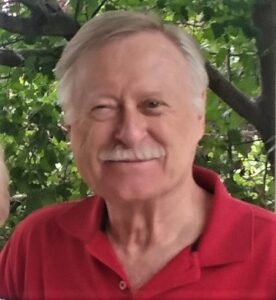 Harry Puncec is a resident of Lakewood and a founding member of not only the Southern Gables Neighborhood Association but the Southern Gables neighborhood itself, back when it was a noisy, dusty construction zone imposing itself on vacant land. From that beginning before the incorporation of Lakewood, forming lifelong friendships with neighbors along the way, he has been a leading contributor to the good of the community. To see more of his stories, click on his name in the dateline at the top of the article.

Subscribe to get an email notice when our weekly articles are published.
Other family history regarding Verdun and the military, my French grandfather and his father were stationed there during WW1. My grandfather was quite young, 16 yrs old, and served as a cook.
My father was an ambulance driver for the military, SP3, I think, though I don’t know what that means.
Do you know anyone who was there in 1956? My mother was a French, civilian employee and worked in the General’s office, so I’m told.
Would be interested to hear from anyone who was there in 1955-57 or who knows information about this time period at the Maginot Barracks.
I was born at the Maginot Barracks in Thierville-sur-Meuse, where my father was stationed in 1956.
Nice of you to check in. I’m glad you made the connection. Harry also wrote about a lonely Christmas in Verdun, bordering Thierville-sur-Meuse. On Guard, December 2022.